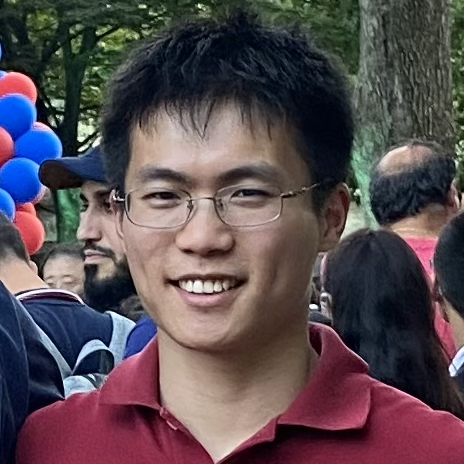
Tao Luo
I am a final-year CS Ph.D. candidate at the University of Pennsylvania (defending August 2026), advised by Boon Thau Loo and Vincent Liu. My research builds distributed systems for large-scale LLM workloads, spanning post-training pipelines, model serving, and retrieval. I am especially interested in agentic RL infrastructure that makes training, rollouts, and evaluation efficient and reliable, so researchers can iterate faster.
I am seeking full-time industry roles starting in 2026.
At Alibaba, I shipped a GPU scheduler that now powers production agentic RL post-training of 100s-of-billion-parameter models on 1000s of GPUs across 4 Alibaba product lines, delivering 3.5x rollout throughput (ROME technical report). I founded and lead RLix 
At UPenn, my research spans LLM serving (ParaFlex) and data and retrieval systems: vector search (ScaleGANN) and query optimization (DeSCO). Previously at Columbia I worked on privacy-preserving ML training (DPF); publications span OSDI, SOSP, SIGCOMM, and SoCC.
Before academia, I spent ~4 years in quant investment, developing strategies and building infrastructure. I hold a B.S. in Financial Mathematics from Southern University of Science and Technology, where I was a founding cohort member.
Projects
Partial Overlapping: Training-Rollout Co-Scheduling for Agentic RL @Alibaba, DAMO Academy
- Independently identified rollout stragglers as the dominant bottleneck in async agentic RL, stalling training GPUs while they wait for samples; proposed and led Partial Overlapping from design to production, a scheduler that runs rollouts as preemptible workloads on stalled training GPUs, delivering 3.5x rollout throughput. Later extended to async multi-LoRA fine-tuning on a shared Megatron-LM backbone.
- Shipped into alibaba/ROLL; now powers production agentic RL post-training of models with 100s of billions of parameters on 1000s of GPUs, including Qoder IDE (coding agent), iFlow CLI (terminal agent), Amap (travel-planning agent), and Alimama (ads); progress reviewed by senior Alibaba leadership (skip-3).
- Contributed to the ROME model launch; work featured in the ROME technical report, as part of Alibaba’s open-source Agentic Learning Ecosystem (ALE).
- Introduced AI-assisted systems engineering on the team, raising shipping velocity: built Partial Overlapping primarily using coding agents (Claude Code, Codex), the first high-priority feature in alibaba/ROLL shipped this way; headlined the team’s public (English/Chinese) and internal technical blog posts as a case study for AI-assisted systems engineering.
RLix: GPU Time-Sharing Orchestration Framework for Post-Training Velocity @Alibaba, DAMO Academy
- Independently founded and lead RLix
- Delivers 2.6x rollout throughput in SWE-agent RL training via elastic GPU time-sharing, with minimal changes to training recipes.
- Designed the priority-based scheduling algorithm: rollout runs as the lowest-priority preemptible stage on idle GPUs, yielding to higher-priority stages (actor/critic training, log-probs) on demand.
- Built the selective weight-sync mechanism: syncs latest weights only to scheduled rollout workers, keeping each RL pipeline’s memory footprint minimal.
- Define and drive the roadmap, working with developers from the open-source community on WIP feature contributions.
Heterogeneous Multi-Model LLM Serving at Scale @University of Pennsylvania
- Designed and built a multiplexed serving system with stage-aligned parallelism that eliminates head-of-line blocking, increasing token throughput by 1.6x while reducing median latency.
- Extended vLLM with multi-model KV cache management, NCCL concurrency controls, and Ray-based distributed execution.
- Developed algorithms for efficient model sharding, replication, placement, and scheduling across heterogeneous serving workloads.
- ParaFlex, SoCC’25 paper
Query Optimization for Declarative Smart Contracts @University of Pennsylvania
- Framed efficiency of Datalog-compiled smart contracts as a view selection problem under a non-standard, history-dependent cost model (Ethereum gas).
- Designed and implemented a selective view materialization algorithm with simplification-based pruning; formally proved correctness and pruning completeness.
- Reduced storage gas by ~78% and total gas by >50% over naive compilation, matching expert hand-tuned Solidity on a benchmark of widely deployed contracts.
- DeSCO paper, FAB’24 (co-located with VLDB).
Privacy-Preserving Scheduling for ML Training @Columbia University
- Designed the first fair-allocation scheduling algorithm for ML training under differential-privacy constraints.
- Improved job throughput by 2x over FCFS under the same privacy budget, verified in large-scale simulations; proved efficiency and fairness guarantees.
- Privacy Budget Scheduling, OSDI’21
Honors & Service
- Program Committee: ACM Symposium on Cloud Computing 2025
- Manjushri Fellowship, University of Pennsylvania, 2021
- China Merchant Bank Scholarship, 2012-2014
- Pioneering Undergraduate Fellowship, 2011-2014